The apprenticeship nobody would design on purpose
Mark Greksa began his working life in restaurants — washing dishes, then working the line. From there he went to work for his father, a master painter from Germany, on residential and commercial jobs where the standard was exacting and non-negotiable. That work paid his way through Fort Lewis College in Durango, where he earned a degree in business and sociology.
Somewhere in between, Mark got cut from the varsity soccer team. It may be the most productive failure of his life. He pivoted straight up the mountain and chased something harder: a spot on ski patrol at Arapahoe Basin. It had always been the dream — not the skiing, the training. The chance to earn his way into an elite group of skiers whose entire job is reaching injured people fast, in bad conditions, on steep terrain. He passed the ski and toboggan tests through years of on-hill work and became a certified EMT as a college freshman.
After graduation, he and and his wife Leah spent two years with the Armed Forces Recreation Center in Berchtesgaden, Germany. Mark worked as a ski patroller and ski guide in winter and a raft guide in summer; Leah taught kids to ski in the winter and spent her summers guiding Sound of Music and Königssee tours through the Bavarian Alps. Between the two of them, they spent two years getting paid to show people a spectacular place and make sure they had the time of their lives — which, in hindsight, was less a job than a rehearsal.
Then came the ride to Greece.


Twenty-four miles of abandoned track
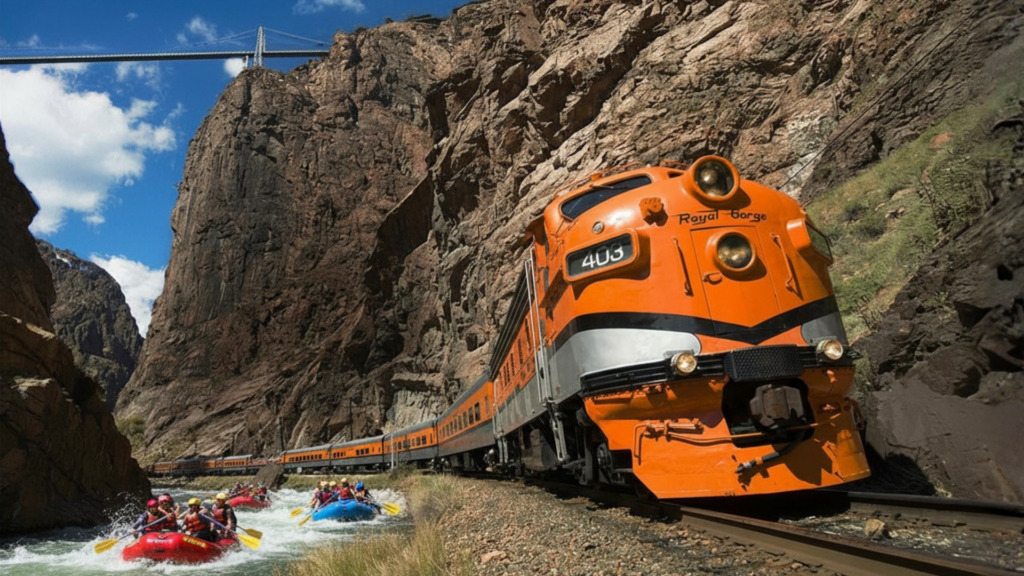
The Royal Gorge Route Railroad was never a solo act. In 1998, Mark launched it alongside Leah, her parents Rosa and Lindsey Ashby, and Dave Ropchan — a genuine family operation, betting on 24 miles of forgotten track through a canyon the railroads had once literally gone to war over and then left for dead. Rosa, Lindsey and Dave stayed on through the early years, and their great gift to the business was restraint: they turned Mark and Leah loose to build, and build fast. All three are alive today, in their nineties, and still light up at what the railroad has become. (Leah passed away from lymphoma in 2012.)
Conventional wisdom said a tourist train down there was a novelty at best. Mark built the opposite: meticulously restored 1950s-era Vista Dome railcars, food prepared fresh onboard, and service calibrated to a standard most destination restaurants never reach — let alone one moving at track speed beside a whitewater river. Food Network, USA Today, NPR and the Travel Channel took notice. Today the Royal Gorge Route carries more than 200,000 guests a year, employs hundreds of people, and anchors the tourism economy of the entire Royal Gorge Region.
The dream that came back around
“My dream was to become a commercial pilot and fly for a major airline,” Mark says. Market conditions in his twenties made that math impossible, so he set it down. He did not set it down permanently. In 2000 — while simultaneously building two railroads, the Georgetown Loop and the Royal Gorge Route — he started flight training. He is now a commercially rated ATP pilot who flies for both business and pleasure, regularly putting his own team members in the air and taking them to conventions and meetings across the country.
That is the pattern, if you want one: Mark Greksa does not abandon things. He reschedules them.
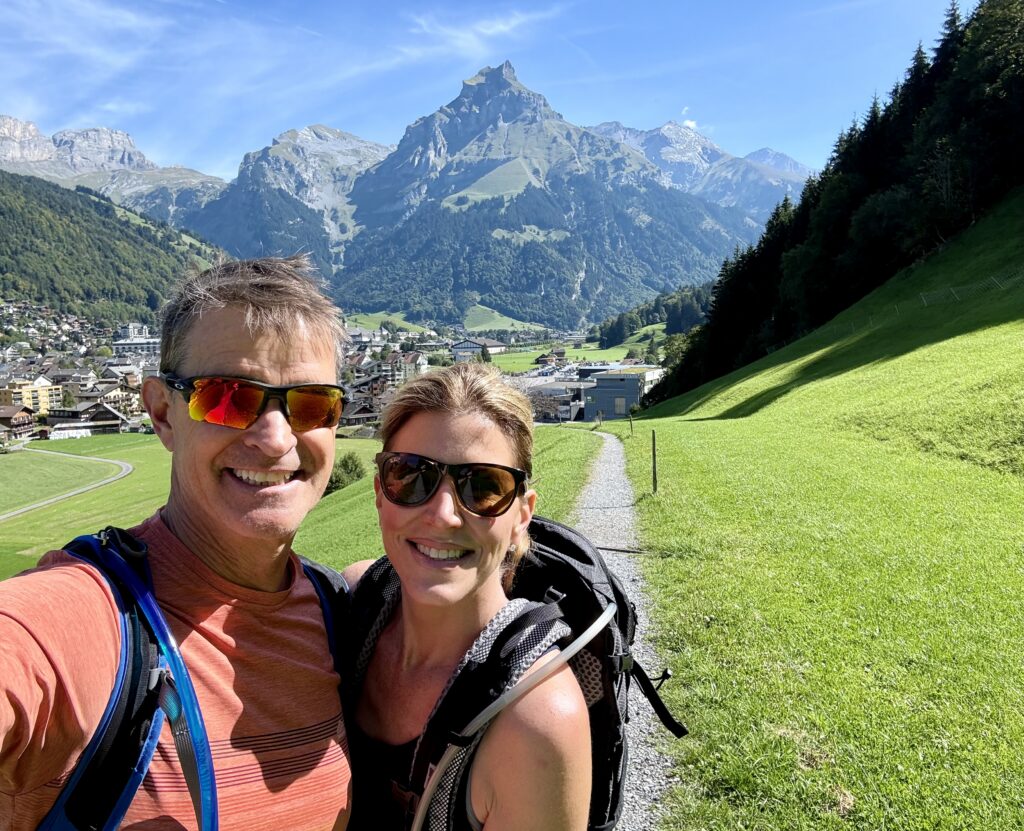
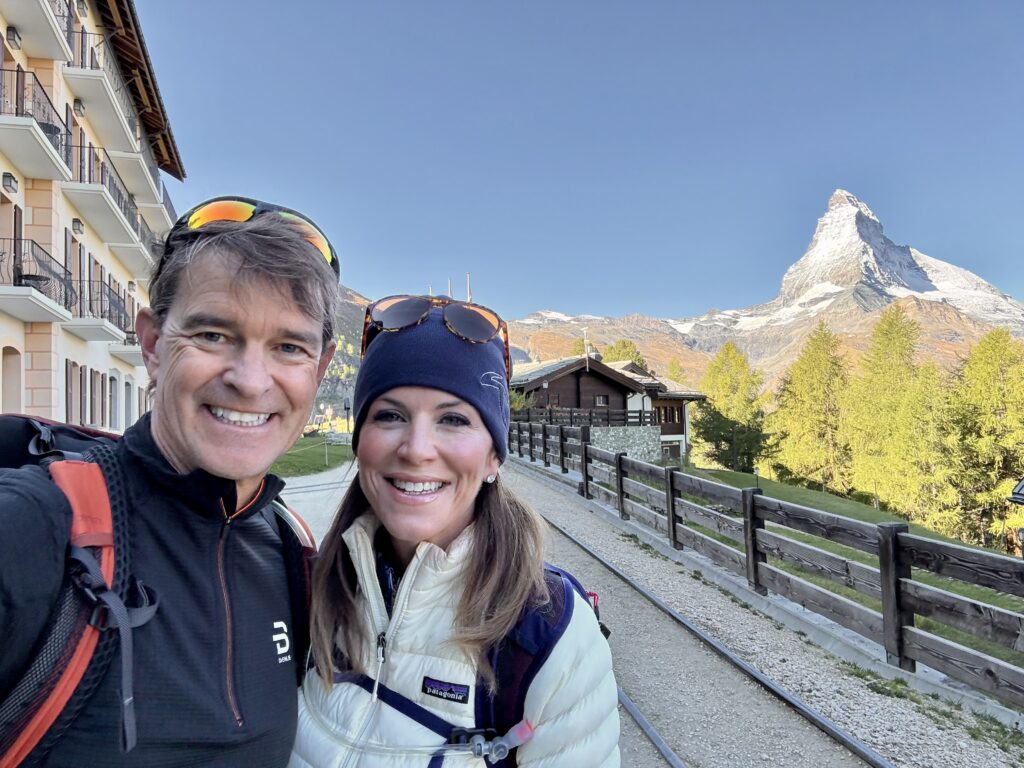
He is also an avid cyclist, mountain biker, runner and kayaker with an appetite for the road that has never cooled. “Traveling close to the ground, whether on a bike or with a backpack on your back, is still one of my favorite ways to experience travel.”
The partnership
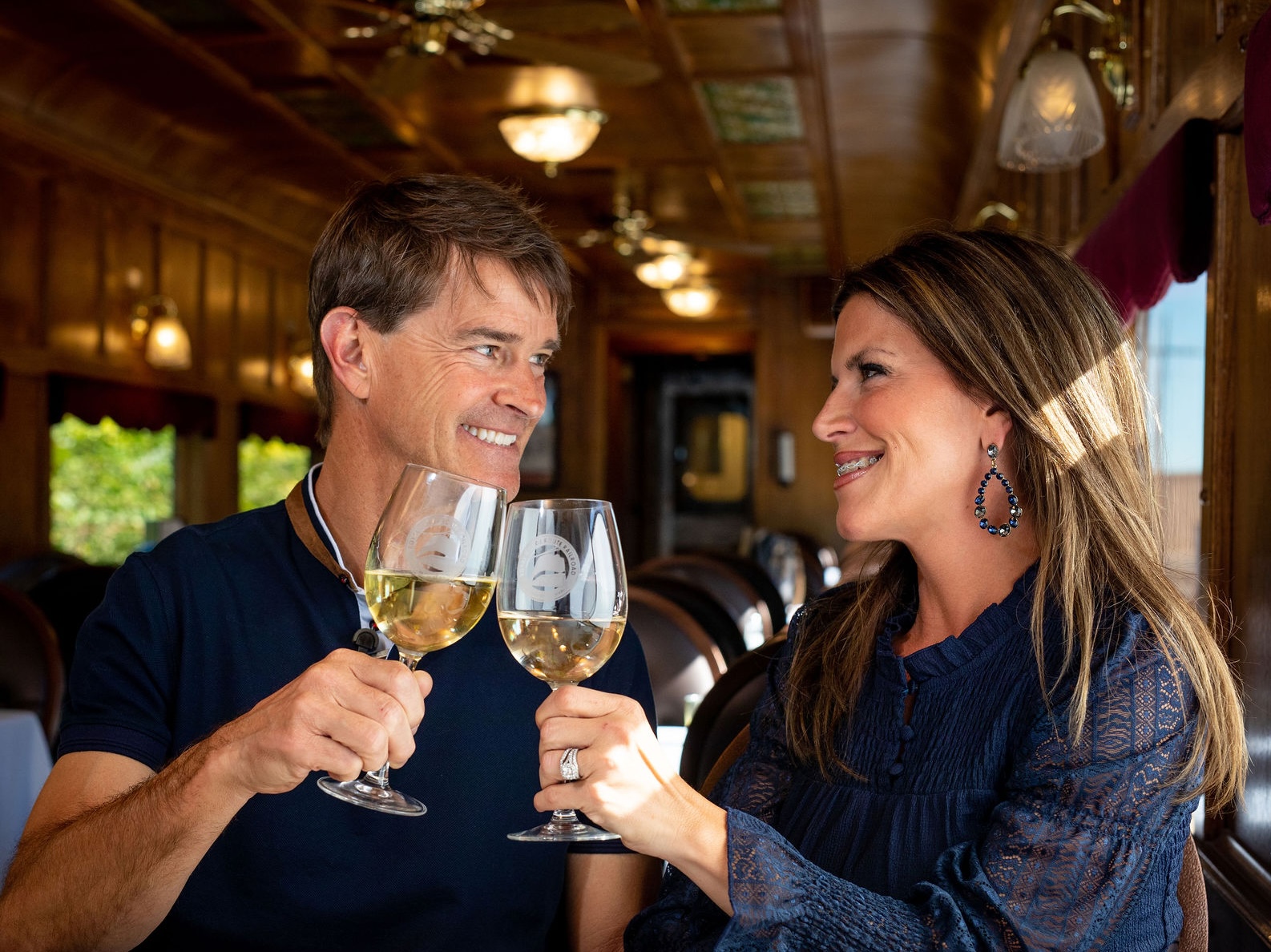
Eight years ago the company gained its second engine. Dawn Greksa — Mark’s wife and the railroad’s Chief Operating Officer — has driven some of the most visible work the company has done in its history.
She led the railcar refurbishment program, taking equipment built in the 1950s and turning it into interiors that belong in a design magazine rather than a rail yard. She oversaw the restoration of the historic Robison Mansion, the 1880s estate at the mouth of the canyon that is now home to Antithesis. And she built the railroad’s retail operation from a modest depot counter into a genuinely successful business in its own right — proof that a gift shop doesn’t have to be an afterthought if somebody treats it like a storefront worth caring about.
“There’s a difference between a life partner and a business partner, and it’s rare to get both in the same person,” Mark says. “Dawn and I make decisions together, argue about them together, and live with them together. Everything we’ve built in the last eight years, we built as partners.”
Together they are also deeply invested in Cañon City itself — in the region’s visitor infrastructure and in the civic projects that make a town somewhere people want to live, not just visit.
The people who actually build it
Ideas are cheap. Mark is quick to say so, and quicker to point at the staff who turn them into steel, wood, plated food and a train that leaves on time.
The railcar refurbishments happen in house — the company’s own craftspeople stripping mid-century equipment to the frame and rebuilding it to a standard most operators contract out and still don’t match. The kitchens execute made-to-order meals at track speed. The service teams deliver the same experience on a quiet weekday morning departure as on the sunset dinner train, to a first-time rider and to a guest on their fortieth trip.
“We have an incredibly talented staff who have taken our ideas and made them real,” Mark says. “Dawn and I can have a vision. They’re the ones who make it happen every single day.”
The opposite of ordinary
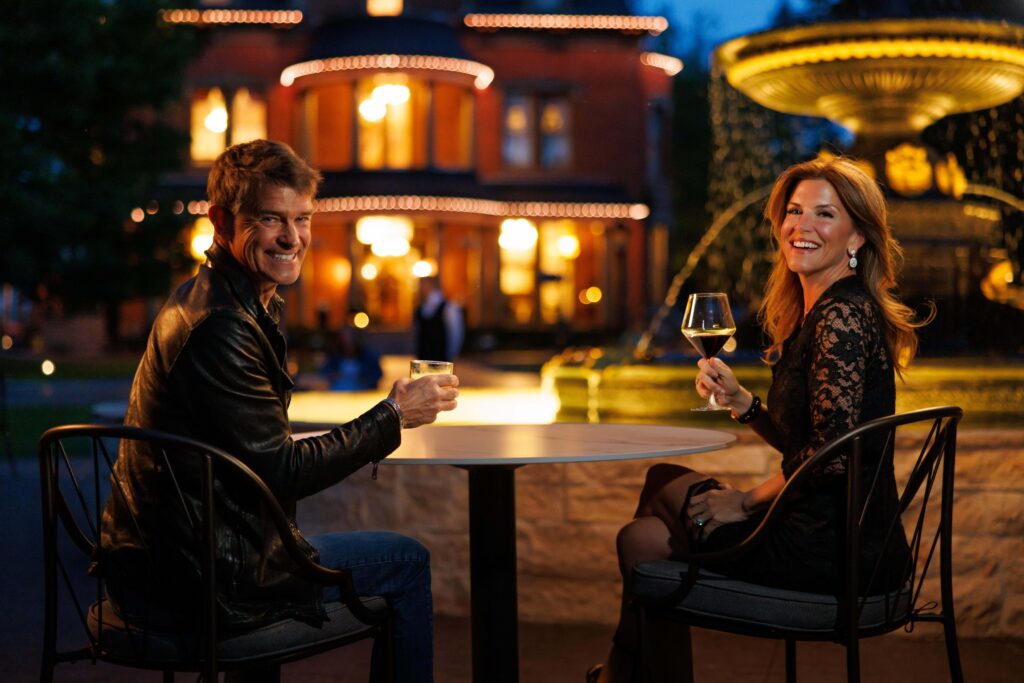
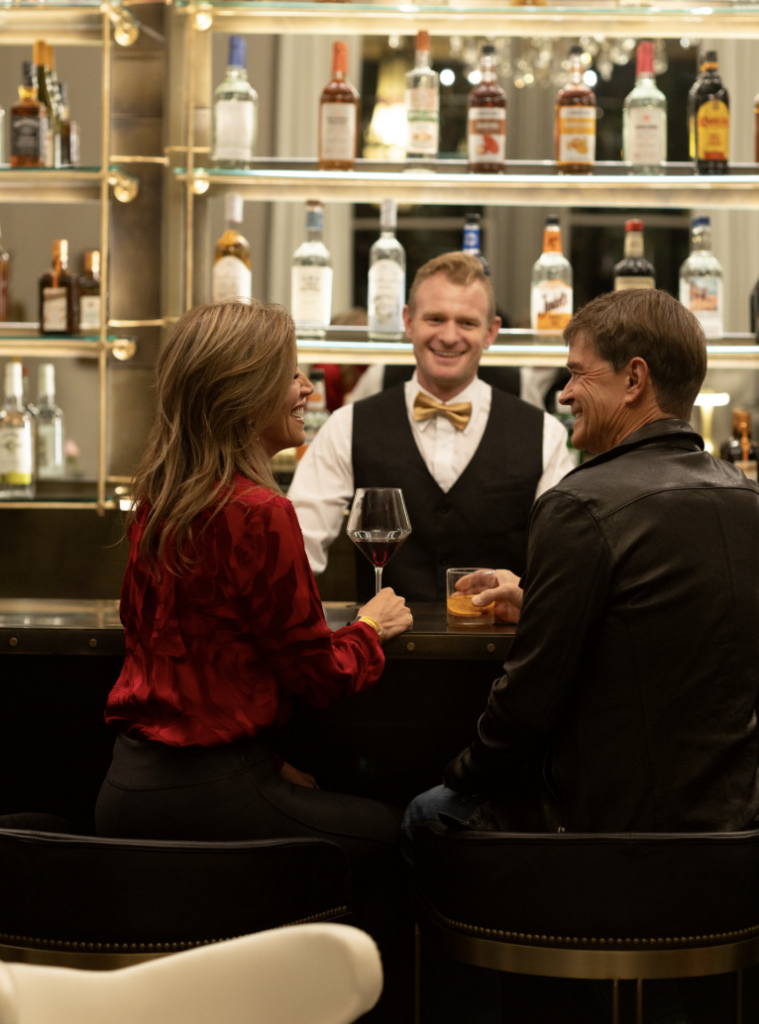
Antithesis is the newest venture: a fine-dining restaurant inside that restored 1880s mansion, on a walled four-acre estate at the mouth of the canyon, pairing refined restraint with bold creative expression. The name is not decoration. It’s a thesis statement — the opposite of ordinary, in the last place anyone expects to find it.
“Working my way through college and earning a business degree was helpful and important,” Mark says, “but travel has always been — and continues to be — my greatest education. Through all my travels, I’ve brought what I’ve learned back to the train and to Antithesis. From delicious food and beverage to top-notch service, we continue to lead the industry.”
Ask him what connects a dish pit, a paintbrush, a toboggan, a raft, a cockpit and a locomotive, and the answer is the same as it was on a road somewhere south of Munich in 1987: find out what’s around the next bend, and talk to everyone you meet along the way.